
The Estates Division of the Clerk of Superior Court
Probate in Mecklenburg is handled by the Clerk of Superior Court, not a standalone probate court. The estates division and special proceedings staff oversee wills, estate administration, guardianships, and related filings. The clerk's main line is (704) 686-0400, and estate matters use a dedicated email at Mecklenburg.Estates@nccourts.org.
This setup matters because people often look for a probate court that does not exist here. The right office is the clerk. The clerk records what each estate must file and keeps the index of estate and special-proceeding cases.
The clerk's recordkeeping duties are set by statute.
Read N.C.G.S. 7A-109 on the records the clerk must maintain.
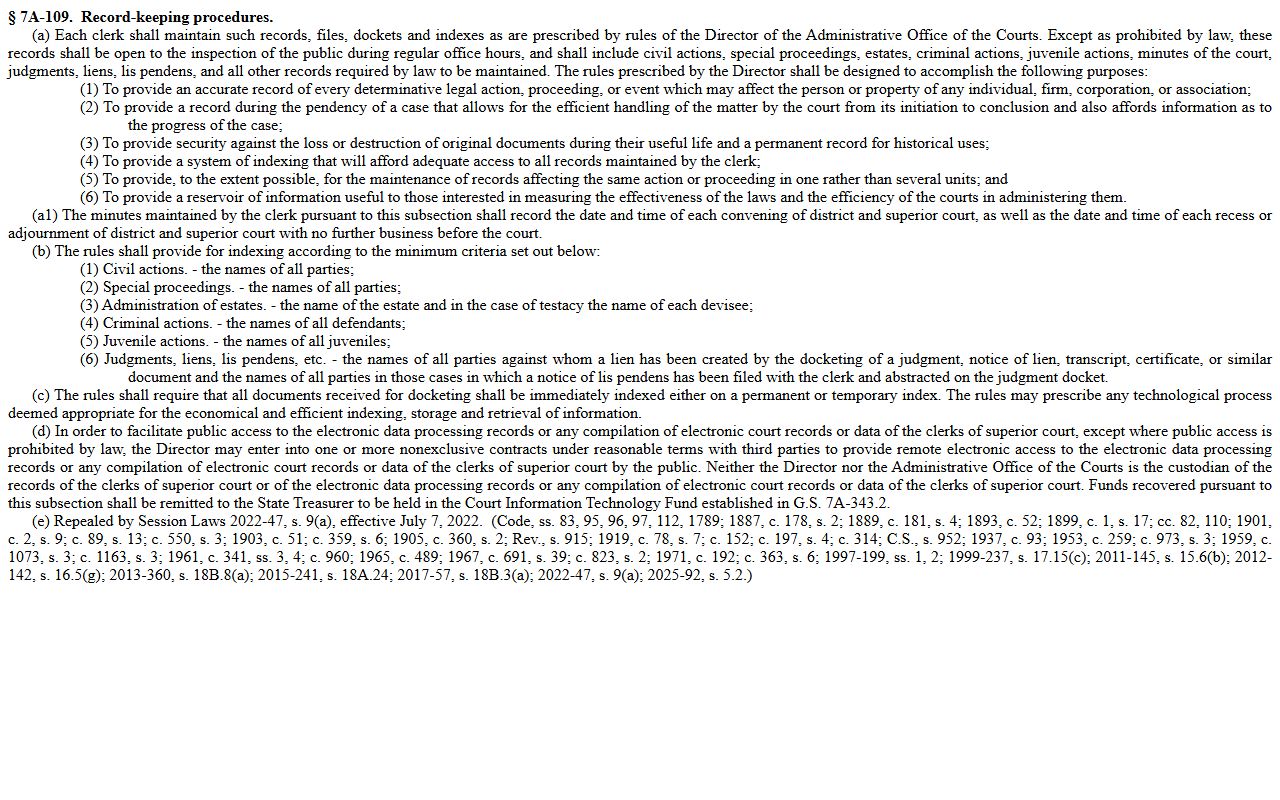
That statute is why the clerk, not a separate court, is the custodian of probate files. In other states this work sits in a probate court or a surrogate's court, but North Carolina keeps it with the clerk, who acts in a judicial role for estate matters.
How Probate Works in Mecklenburg County
Probate follows a set path once someone dies. The steps below outline the common order, though every estate differs.
- Confirm the person lived in Mecklenburg or owned property needing administration here.
- Locate the original will if one exists.
- Contact the clerk's estates division or special proceedings.
- File the application with the death certificate, will, heir information, and asset estimates.
- The clerk issues letters if the requirements are met.
- The personal representative gathers assets, handles claims, and files inventories and accountings.
- Final accounting and closing filings go to the clerk.
When there is no will, state intestacy law decides who inherits, and the clerk appoints an administrator instead of an executor. The personal representative carries real duties. They give notice to creditors, gather and value assets, pay allowed claims, taxes, and costs, then distribute what remains. The clerk reviews the inventory and accountings along the way and signs orders as the estate moves toward closing.
Guardianship and incompetency matters are special proceedings before the clerk rather than ordinary estates. They decide who manages the affairs or property of a minor or an adult who cannot manage alone. Because these cases can involve medical and capacity evidence, parts of the file may be sealed or redacted.
How to Search Mecklenburg County Probate Records
Estate cases can be searched through the eCourts Portal. Use Smart Search by record number or name. For hearings, Search Hearings includes a Probate or Mental Health hearing type. Onsite public access is available at the courthouse during public hours.
For an estate or special-proceeding document filed before October 9, 2023 that is missing from the Portal, email the estates division with the record request type, party names, and file number if known. That email path is the main route for older probate files.
Do not assume every probate document is online or downloadable. Some estate files are public, but the level of detail you can view can depend on the record and any sealing. When the Portal does not show what you need, the clerk's estates staff can tell you whether the file exists and how to get a copy.
What a Mecklenburg County Estate File Shows
An estate file is built from standard filings. The table lists the fields you can expect when you open a probate record.
| Field | What It Shows |
|---|---|
| Estate / Case Number | The clerk's file number for the estate. |
| Decedent Name | The person who died. |
| Personal Representative | The executor or administrator handling the estate. |
| Will Filed | Whether a will was offered for probate. |
| Inventory and Accountings | Asset lists and financial reports filed over time. |
| Orders and Claims | Clerk orders and creditor claims against the estate. |
Sensitive medical, financial, or minor data may be redacted from a public copy. Reading these fields in order shows the life of the estate, from the first application through the final accounting that closes the case.
Common Probate Terms
Probate uses words that confuse many families. A short glossary helps when reading an estate file.
- Testator
- A person who makes a will.
- Executor
- The person named in a will to settle the estate.
- Administrator
- The person the clerk appoints when there is no will.
- Intestate
- Dying without a valid will, so state law decides who inherits.
- Guardianship
- A court role to manage the affairs of a minor or incapacitated adult.
- Conservatorship
- A role to manage the property of a person who cannot manage it alone.
Restricted Probate and Special-Proceeding Records
Most routine estate files are public, but some materials are not. Guardianship and incompetency cases can hold medical, capacity, and financial information that is restricted or redacted. Adoption records are confidential under Chapter 48 and are not ordinary public files.
Read N.C.G.S. 48-9-102 on the confidentiality of adoption records.
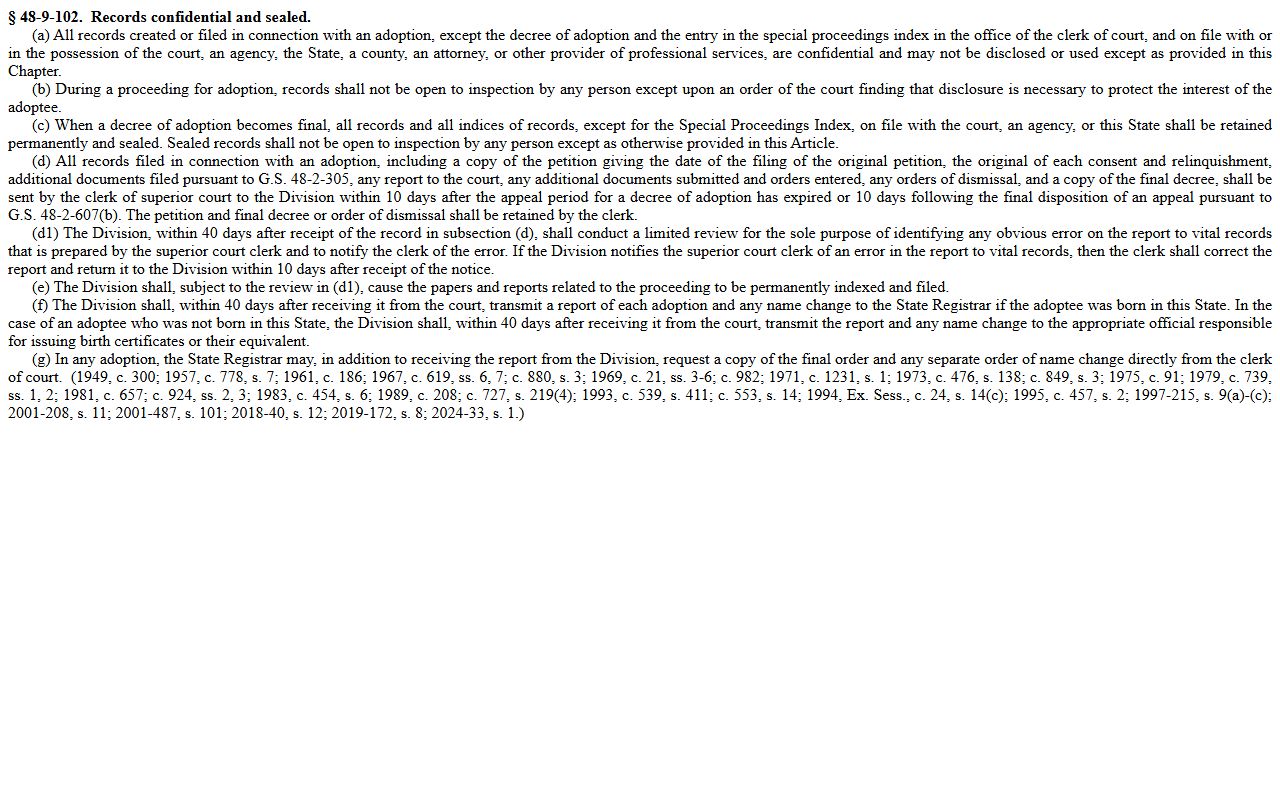
Do not expect adoption or sensitive guardianship materials to appear in the public Portal, since the law closes them by default rather than by request.
Mecklenburg County Estate Fees and Statutes
Estate costs and special-proceeding fees are set by statute rather than a flat local price list. The two statutes below govern these costs, and the clerk applies the current schedule. Confirm exact amounts with the clerk before filing.
| Fee Type | Set By |
|---|---|
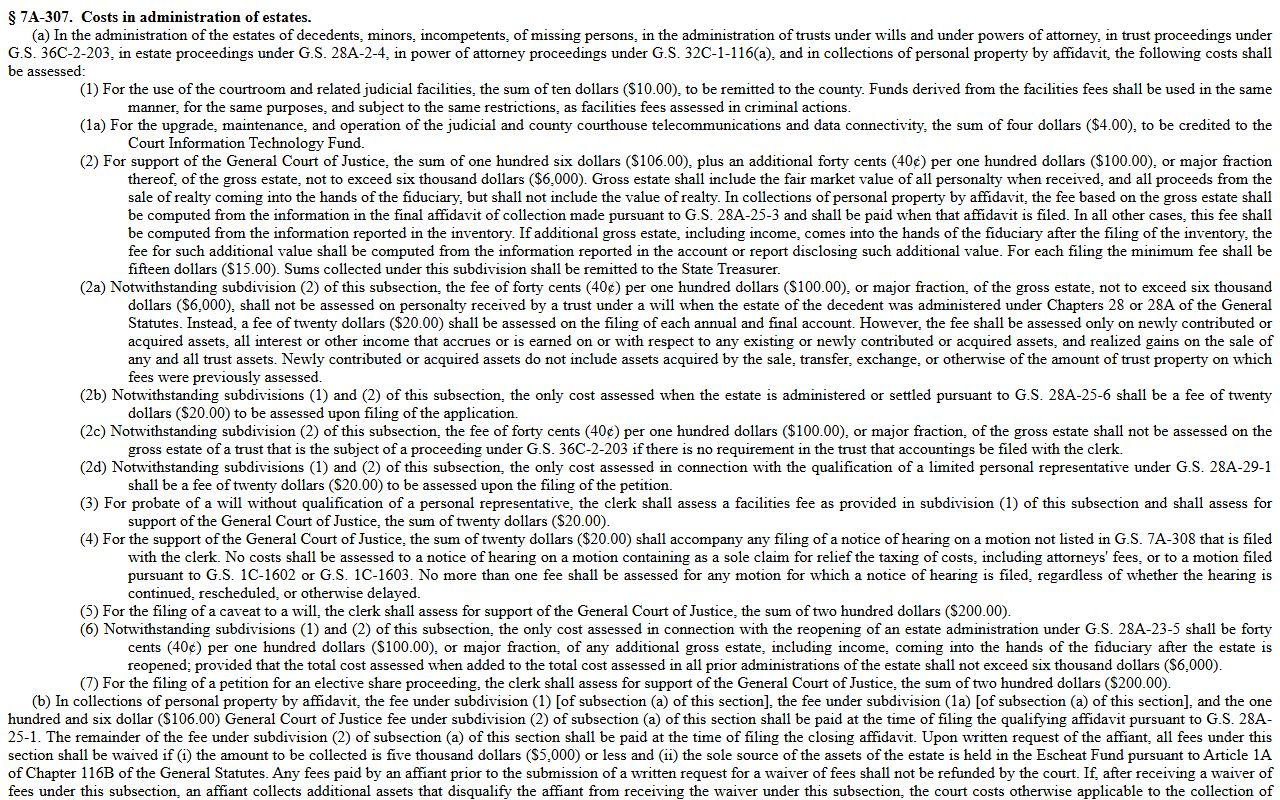
| Estate administration costs | N.C.G.S. 7A-307 |
| Special proceeding fees | N.C.G.S. 7A-308 |
| Certified copies and clerk copies | Ask the Clerk of Superior Court |
The estate cost statute sets the core charges in an estate.
Read N.C.G.S. 7A-307 on costs in estate matters.
Special proceedings, such as some guardianship matters, follow a separate fee statute.
Read N.C.G.S. 7A-308 on miscellaneous special-proceeding fees.
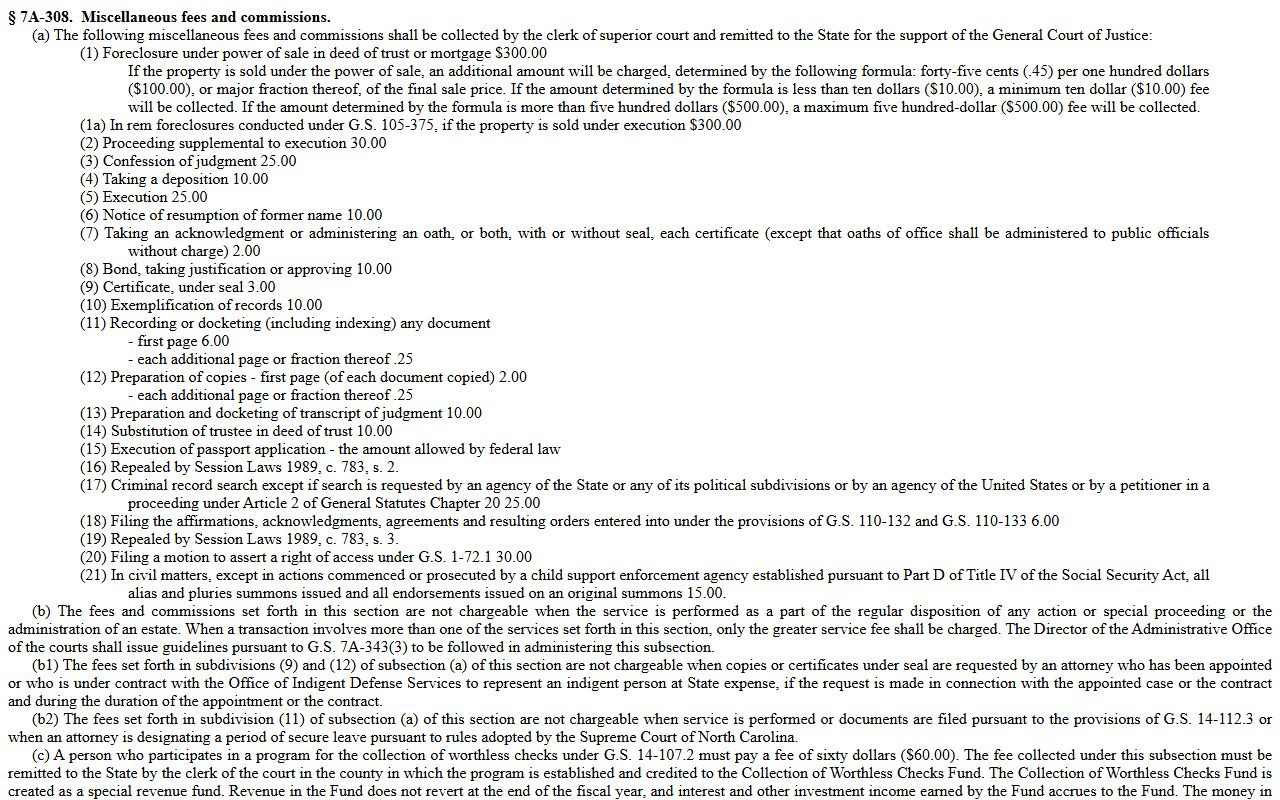
Because these costs are statutory, the clerk can give you the current figure for your filing. Some estate costs are based on the value of the estate, so the amount can vary from one case to the next. That is another reason to ask the clerk rather than rely on a flat number, since the right figure depends on the specific estate and what it holds.
Clerk of Superior Court Estates Contact
All probate filings and requests go through the clerk. Use the card below for the office and the estates email.
Clerk of Superior Court, Estates
832 East Fourth Street
Charlotte, NC 28202
(704) 686-0400
Mecklenburg.Estates@nccourts.org
Note: For an estate document filed before October 9, 2023, email the estates division with the record type, party names, and file number if known.