
How to Find Recently Released Mecklenburg County Inmates
The Sheriff's resident inquiry is the first stop. Because it runs in real time and holds three years of data, a person's release shows through the record status. Search by name, PID, or JID, then read the disposition and bond fields. A disposition of bonded, expired, or inactive can signal that the person is no longer in active custody.
Be careful, though. A resident can have more than one hold. One charge may resolve while another keeps the person in custody. When the online record is unclear, call the detention information line. The Sheriff's VINE page is the official starting point for release and custody notifications.
See the Sheriff's VINE page for victim and release notification.
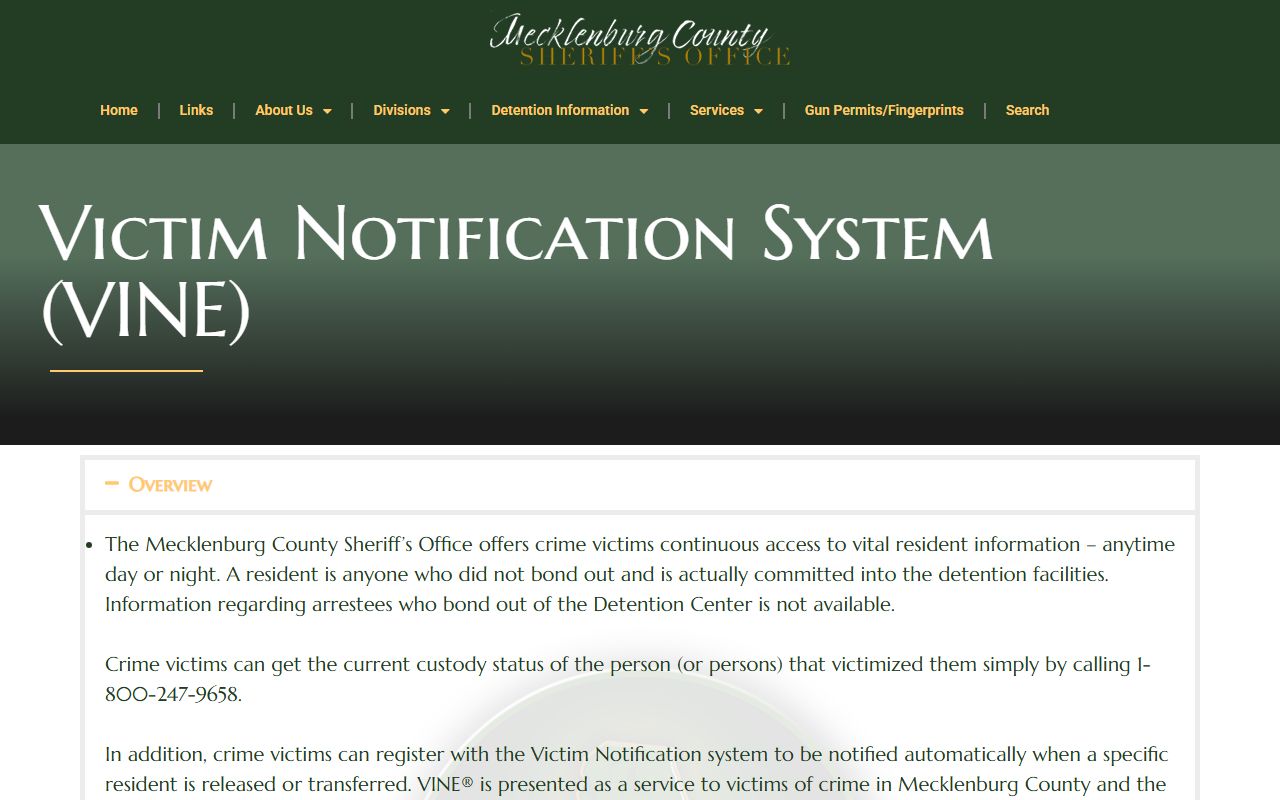
VINE is the tool that watches a record for you and sends an alert when the custody status changes, so you do not have to keep checking the roster by hand.
Setting Up Release Notifications
VINELink is the public side of the VINE system. You register once, then get a call, text, or email when custody status changes, such as a release or transfer. It is separate from the court and Sheriff search tools.
- Open VINELink and choose North Carolina.
- Search by the person's name or by an offender or case identifier.
- Register a phone or email and set your notification preferences.
Open VINELink to search and register for alerts.
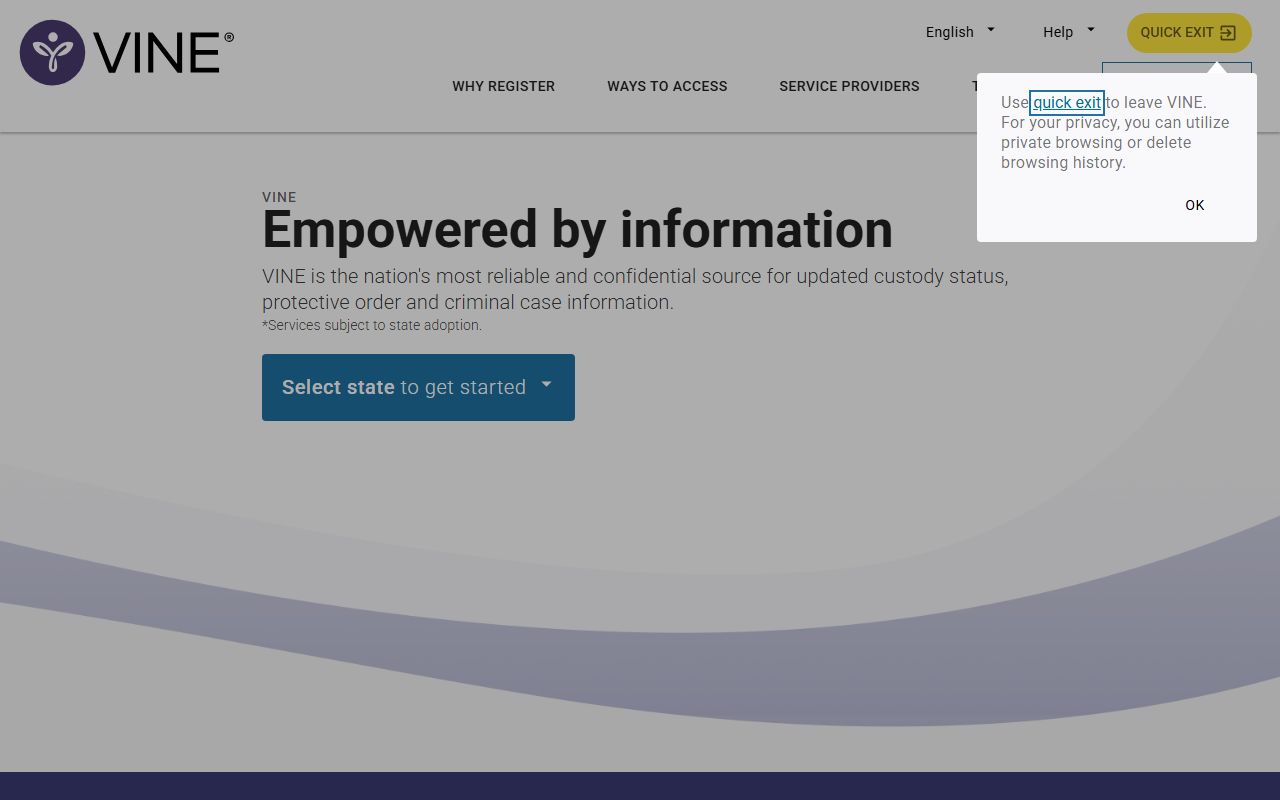
Set up the alert early, since a release can happen with little warning. VINE is most useful for victims and concerned parties who need to know about a release, transfer, or other custody change without checking the roster every day. The registration only asks for a contact method and your notification preferences, and you can register more than one way to be reached.
Searching the North Carolina Department of Adult Correction
If a person went to state prison instead of staying in the county jail, use the North Carolina Department of Adult Correction offender search. It covers state custody and supervision, which is separate from Mecklenburg jail custody. The table shows the common fields.
| Field Label | Type | Required | Notes |
|---|---|---|---|
| Offender Name | Text | No | Search by name |
| Offender / OPUS Number | Number | No | Most precise if known |
| Gender / Race / Age | Dropdown | No | Narrows results |
| Status / Location | Dropdown | No | Current custody vs supervision |
Open the NC DAC offender search for state prison custody and release status.
Federal Bureau of Prisons Locator
Federal custody is tracked by the Bureau of Prisons, not the county or state. The BOP locator searches by name or by a federal number. It is the right tool when a case was federal rather than state.
| Field Label | Type | Required | Notes |
|---|---|---|---|
| First / Last Name | Text | One criterion | Name search |
| Register Number | Text | No | BOP register number |
| Race / Age / Sex | Dropdown | No | Narrows name results |
Use the BOP inmate locator for people in federal custody.
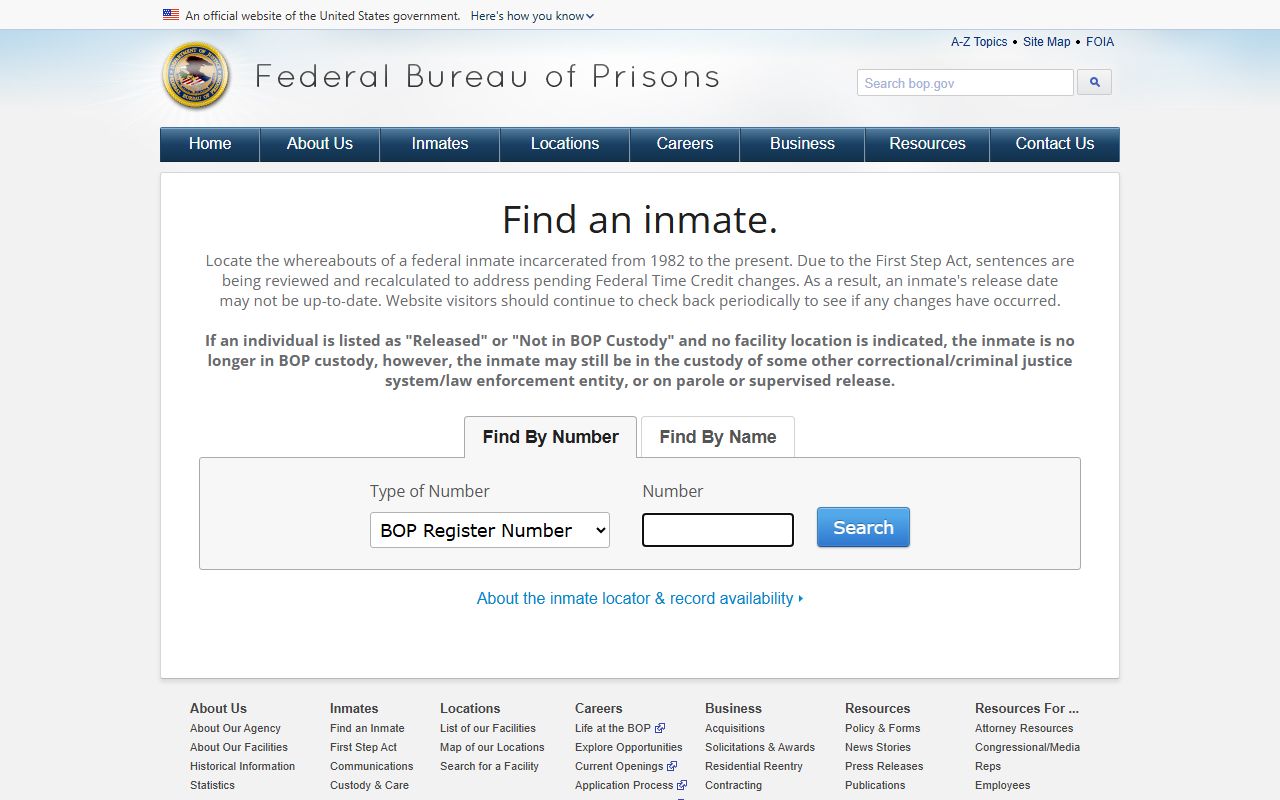
The BOP locator is national, so it works no matter where the person is held.
Verifying Release in Person or By Phone
At release, a resident is escorted to the resident release area at Detention Center Central to close the trust account. Finance decides whether the balance comes as cash, check, or both. Money releases happen at Central, 8 a.m. to 5 p.m., seven days a week, with one release allowed per stay, a $25 minimum, and a $2 fee. Cash bond money release can run 24 hours a day if eligible and payable to the Clerk of Superior Court.
See the Sheriff's send-money and release page for account and release details.
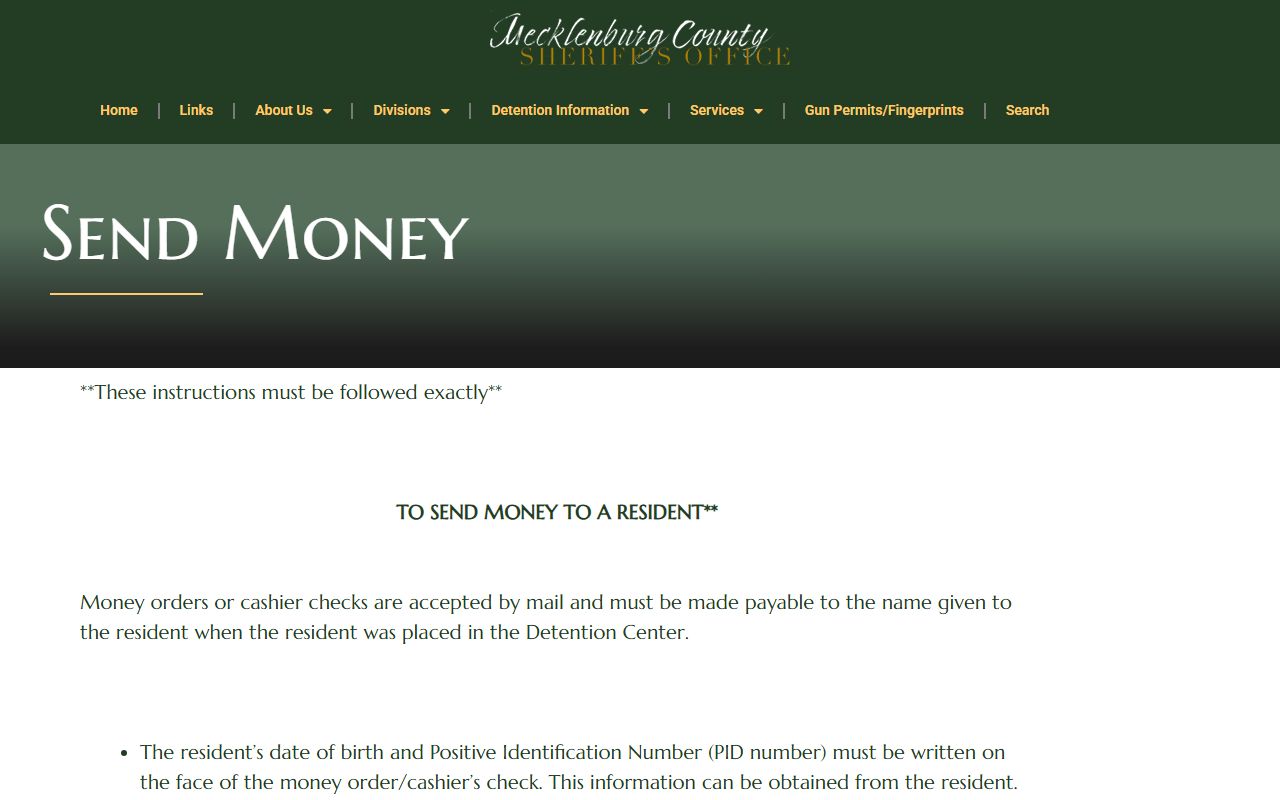
A released resident has seven days to pick up an undelivered commissary order before it may be donated to a nonprofit. A person picking up money for someone else needs valid identification, and those requests are handled at Central finance.
Transferred residents are treated differently from released ones. A transferred resident may get a credit form and is encouraged to leave a forwarding address so any balance can follow. Because the resident inquiry runs in real time, the status field is the fastest way to tell a release from a transfer, but a phone call to detention can confirm an unclear record.
North Carolina Sex Offender Registry
The State Bureau of Investigation runs the public sex offender registry. It is a separate search from the jail roster and the prison locator. You can search by name or by a geographic area. The table lists the main fields.
| Field Label | Type | Required | Notes |
|---|---|---|---|
| Offender Name | Text | No | Search by name |
| Address / City / County / ZIP | Text | No | Geographic search |
| Radius | Dropdown | No | Distance from an address |
| Registration Status | Dropdown | No | Options vary |
A profile generally shows a photo, name, physical description, registered address, offense, and registration status. Use the North Carolina sex offender registry for the official search.
Parole and Probation Information
After a state sentence, supervision in North Carolina is handled through the Department of Adult Correction and the Post-Release Supervision and Parole Commission. Supervision can include reporting rules, conditions, and consequences for a violation. A probation violation can trigger an order for arrest, which then shows in the jail record as a PV process type. Questions about a specific person's supervision status should go to the supervising agency, since those details are not all in the public locators.
For county-level probation tied to a District or Superior Court case, the court file and the clerk can point you to the right office. Bond and no-bond status on a violation are case-specific, so an attorney can explain what applies.
It helps to keep the systems straight. The county jail roster shows local custody. The state offender search shows prison custody and supervision. The federal locator shows federal custody. A person released from one can still be picked up by another if a detainer exists. When a release does not show where you expect, check the next level up before assuming the person is free.
Reentry Resources in Mecklenburg County
The Sheriff's Office runs Re-Entry Support Services, known as RESS, to help residents return to the community. Legal aid groups round out the help for civil and record-clearing needs. The cards and list below point to the main options.
MCSO Re-Entry Support Services
700 East Fourth Street
Charlotte, NC 28202
(704) 336-8100
Legal Aid of North Carolina
Civil legal help
Charlotte, NC
(704) 376-1600
Spanish line (800) 247-1931
See the RESS page for the Sheriff's reentry support.
Reentry help works best when it starts before release, so reach out early.
- Charlotte Center for Legal Advocacy for civil legal needs.
- Legal Aid of North Carolina for low-income civil cases.
- MCSO Re-Entry Support Services for transition support.
Civil Rights Restoration After Release
Rights can change after a conviction. In North Carolina, voting rights depend on the status of the sentence under current state law, so check the North Carolina State Board of Elections for the latest rule before assuming. An expunction can clear an eligible record and restore some opportunities that a conviction blocked. Employment and licensing effects vary by job and by record. Because these rules shift, treat any general statement as a starting point and confirm with an official source or attorney.
The practical order is simple. Confirm the sentence is fully complete, including any supervision. Check current state guidance on voting. Ask an attorney about an expunction if a record is blocking work or housing. Each step depends on the specific record, so a general rule is no substitute for checking the actual case.